


Reformer Pilates or Weights - Which Suits You?
Some people want a workout that leaves them feeling strong and energised. Others want to move better, ease stiffness and build confidence without feeling smashed. If you have been weighing up reformer pilates or weights, the real question is not which one is better overall. It is which one suits your body, your goals and your routine right now.
That is where a lot of people get stuck. They assume they need to pick a side - strength floor or reformer studio - when the smarter answer is often more personal than that. For busy locals juggling work, family and everything else, the best training style is the one you can stick with and actually enjoy.
Reformer pilates or weights - what is the difference?
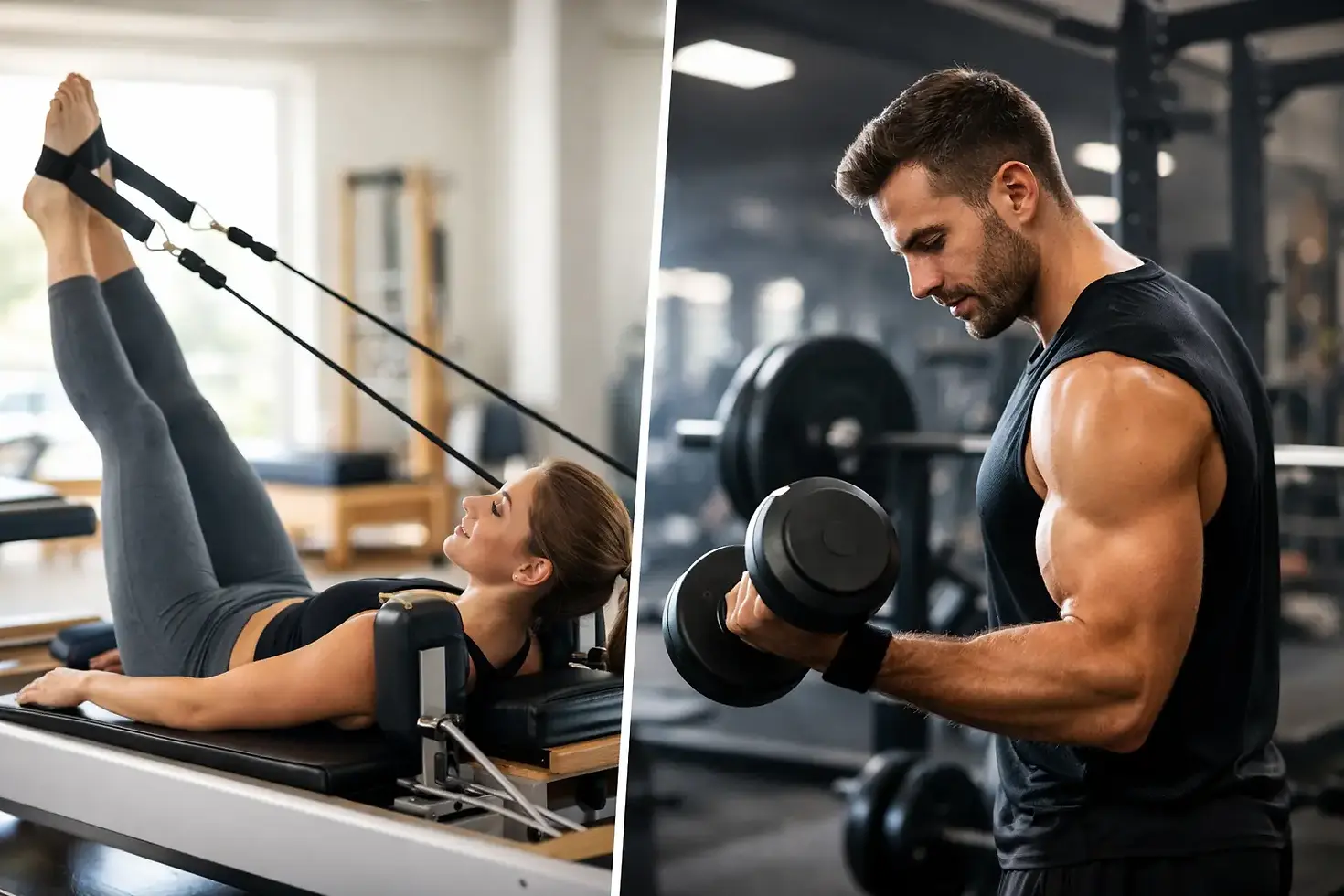
Reformer Pilates and weight training can both make you stronger, but they get there in different ways. Reformer Pilates uses spring resistance, controlled movement and a strong focus on posture, stability and core control. It is less about lifting the heaviest load possible and more about moving with precision.
Weights, on the other hand, are usually the more direct path if your goal is to build muscle mass, increase maximal strength and improve bone density. Dumbbells, barbells, machines and cable stations let you progressively increase load over time. That makes weights especially effective for measurable strength gains.
Neither option is only for one type of person. Reformer is not just for flexibility, and weights are not just for bodybuilders. Both can be beginner-friendly in the right environment, and both can challenge very experienced members too.
When reformer Pilates makes more sense
If your body feels tight, your posture needs attention or you spend most of your day sitting, reformer Pilates can be a very smart place to start. The reformer encourages control through the core, hips, glutes and shoulders, which often helps people feel more connected to how they move.
For many adults, especially those returning to exercise after time away, that matters. You may not need a workout that leaves you gasping. You may need one that helps your body feel supported again. Reformer Pilates often appeals to people who want strength without impact, structure without intimidation and a class format that keeps them accountable.
It can also be a strong option if you are managing general niggles or want exercise that feels kinder on the joints. That does not mean it is easy. A good reformer session can absolutely light up your legs, core and upper body. It just does it with more control and less emphasis on heavy external load.
For busy parents and professionals, there is another plus. Reformer classes remove decision fatigue. You book in, show up and follow a coach-led session. That structure can make consistency easier than trying to design your own gym program after a long day.
When weights are the better choice
If your main goal is building muscle, getting noticeably stronger or changing your body composition, weights usually have the edge. Resistance training with weights gives you clearer progression because load is easier to track. You know what you lifted last week, and you know whether you are improving.
That matters if you want results you can measure over months, not just how you feel after class. Weight training is also one of the best tools for supporting healthy ageing, bone strength and day-to-day function. Carrying groceries, lifting kids, moving furniture, climbing stairs - strength carries over into real life.
Weights also suit people who like flexibility. You can train solo at 5 am, squeeze in a quick session late at night or follow a program that targets exactly what you want to improve. In a 24/7 fitness setting, that kind of convenience is a big advantage when your schedule is anything but predictable.
The trade-off is that weights can feel more intimidating at first, especially if you are unsure about technique or do not want to walk into a space that feels overly serious. That is why the environment matters just as much as the equipment. In a supportive, judgment-free community, weights become far more approachable.
Reformer pilates or weights for weight loss?
This is where expectations need to be realistic. Neither reformer Pilates nor weights is a magic fix for fat loss on its own. Weight loss comes down to the bigger picture - training, daily movement, nutrition, sleep and consistency.
That said, both can help. Reformer Pilates can improve body awareness, build lean strength and support regular movement, which is valuable if you are creating healthier habits. Weights can help preserve and build muscle, which supports your metabolism and body composition over time.
If you are choosing one purely for weight loss, the better option is usually the one you will do consistently. A program done three times a week beats the perfect plan you quit after a fortnight.
Which is better for beginners?
Beginners often do well with either option, but for different reasons. Reformer Pilates can feel less overwhelming because the class is guided, the pace is controlled and there is usually a strong focus on form. It is especially appealing if you want coaching, routine and a lower-impact start.
Weights can be just as beginner-friendly when you have proper instruction. In fact, learning the basics early can set you up for long-term progress. If you are new to the gym floor, a few sessions with a coach or trainer can make a huge difference to confidence.
The real beginner mistake is assuming you need to be fit before you start. You do not. You need a place that meets you where you are and gives you options that fit your current stage, not someone else’s.
Why combining both often works best
For a lot of people, reformer Pilates or weights is not the best question. The better question is how these two training styles can work together.
Weights can build raw strength and muscle. Reformer Pilates can improve stability, mobility, posture and movement quality. Put them together and you get a more balanced approach. You are not only stronger. You move better, recover better and often feel better in your body.
This combination makes sense for people who want variety without losing focus. Two weights sessions and one or two reformer classes each week can be enough to create noticeable changes in strength, tone and how you carry yourself. It also keeps training fresh, which helps with motivation.
That variety is one reason a full-service fitness and wellness space works so well for real life. You are not locked into one style of training. You can lift when you want strength, book reformer when you want guided movement, and adapt your week around your energy and schedule.
How to choose what fits your goals
If your goal is muscle growth, strength and visible body composition changes, start with weights. If your goal is core strength, mobility, posture and low-impact training, start with reformer Pilates. If your goal is overall fitness and long-term consistency, there is a strong case for mixing both.
You should also think about what you enjoy. Some people love the focus and flow of a reformer class. Others feel empowered by the independence of the gym floor. Some need booked sessions to stay committed. Others want the freedom to train whenever they can.
Your history matters too. If you have had injuries, are returning after a long break or feel uneasy in a traditional gym setting, reformer might be the easier entry point. If you have clear strength goals and like tracking progress, weights may be the better anchor for your program.
There is no prize for choosing the harder-looking option. The best choice is the one that keeps you coming back.
The best training plan is the one you can sustain
Fitness does not have to be all or nothing. You do not need to become a Pilates person or a weights person to get great results. You just need a routine that feels realistic, supportive and worth repeating next week.
That is why convenience, variety and community matter more than people think. When you have access to different ways to train under one roof, it becomes easier to adjust without falling off completely. A busy week does not have to mean doing nothing. It might just mean swapping a heavier session for reformer, or vice versa.
At My Gym, that flexibility is part of the point. You can build strength, improve movement and stay consistent without forcing yourself into one version of fitness.
If you are still deciding between reformer Pilates or weights, start with the option that feels most approachable. Confidence grows quickly once you are moving, and the right next step often becomes obvious after that.


Comments